
Clay Release Mugshots and Records
A booking photograph is created during an arrest and jail admission. It remains tied to that event after the person leaves custody. The image does not prove a charge was sustained, and it does not reveal whether the person is still jailed. Release status must come from the custody event, while the case result comes from the Clay County court record.
Florida Constitution article I, section 24 and Chapter 119 establish broad access to government records, subject to exemptions. CCSO’s fee schedule treats booking photographs as requestable records. Access can still change when a record is sealed, expunged, protected, or redacted. Juvenile, victim, medical, active-investigation, security, and protected personal information may be withheld under applicable law.
A photo should be labeled with its source and record type. A CCSO booking image is not the same as an FDC offender photograph made during state imprisonment. Neither should be described as a current portrait or used to infer what happened after the image date.
Clay Release Mugshot Source Channels
Clay County has several possible photo channels, but none is a complete archive. Start with the agency that handled the identified booking. Move to a records request if the public card has changed or disappeared. State and news images answer different questions and must be kept in context.
| Channel | Has a photo? | How to use it |
|---|---|---|
| CCSO inmate catalog | Often | Search the exact booking by name, date, charge, and traits. Result cards support a booking image. |
| CCSO public-record request | On request, subject to exemptions | Give the full name and booking number, then ask for the booking photograph and release file. |
| CCSO app and social channels | Selective or unverified | Use as agency communication only. No official source confirms a complete inmate-photo or release-list function. |
| FDC offender search | May show an offender image | Use only when the person entered Florida state custody. It is not necessarily the Clay arrest photo. |
| VINELink | Varies by agency record | Use for custody status and alerts, not as the authoritative image archive. |
| Official news or press item | Sometimes | Read the original dated item. Publication is selective and does not create a complete booking list. |
| Third-party archive | Sometimes | Treat only as a lead. Copies may be stale, mislabeled, or detached from later case action. |
The first two channels are the strongest for a Clay County jail booking. FDC is the better source for a state-prison identity image, while the Clay Clerk docket is the source for disposition and later sealing or expungement activity.
Search Clay County Booking Photos
The official CCSO Police-to-Citizen catalog accepts last, first, and middle name, plus age, charge, arrest date, race, and sex. Those fields help separate similar names. Public result cards can include a booking image, booking and court details, bond, and a released or expected-release calendar date.
The catalog is a discovery tool. It does not promise a fixed period for keeping a released booking online. A missing image can mean the card is no longer displayed, an exemption applies, the search terms do not match, or the system is unavailable. It cannot be treated as proof that the arrest never occurred or that the record was expunged.
The official Clay inmate catalog capture shows the search controls and result-card format:
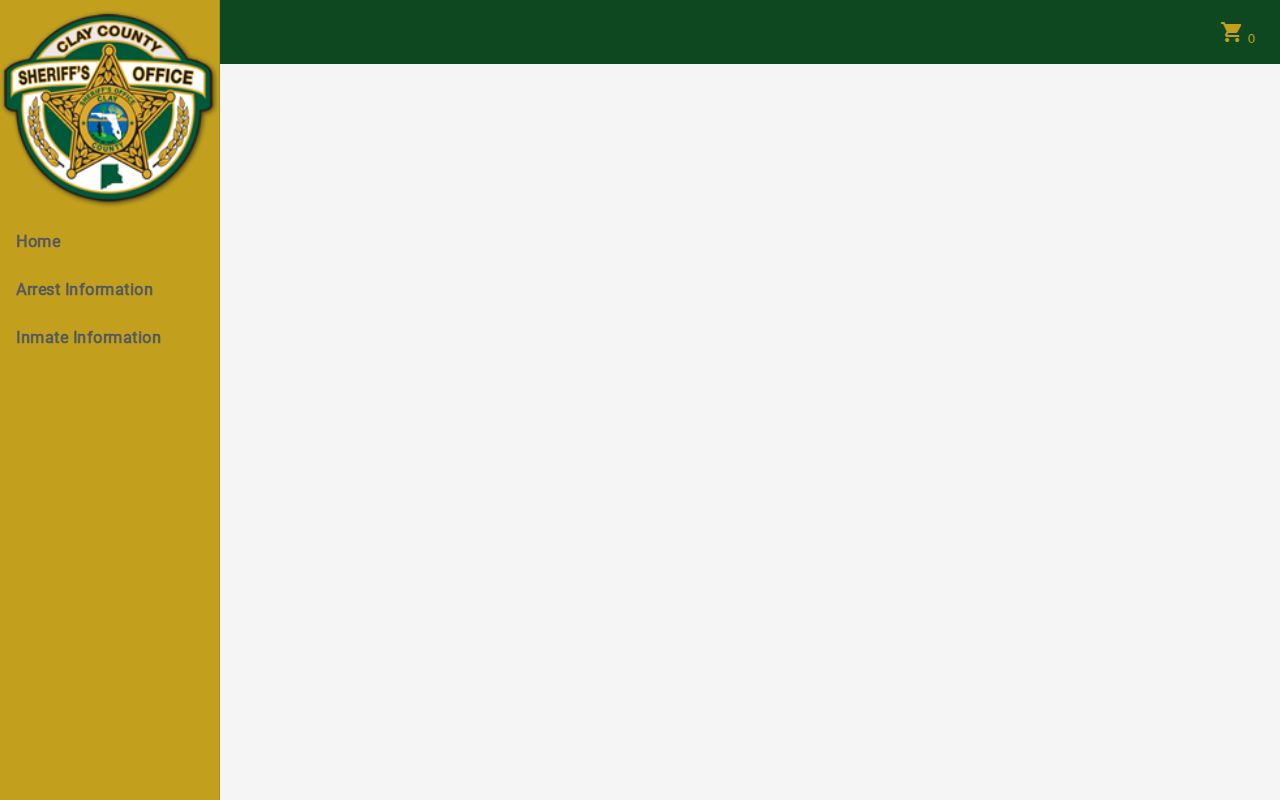
The result design can help identify the correct booking. Release time, release reason, and final court disposition still require other official records.
Match Clay Release Photo Identity
Do not identify a person from appearance alone. Match the photograph to the booking number, full name, admission date, and case number. Age, race, sex, height, weight, charge, and booking agency can help resolve similar names, but the numbered booking remains the best Clay County key.
Repeat admissions may have different photos and different outcomes. Save the source date and record label with the image reference. If the CCSO card says “Released,” obtain the event reason before describing the next status. If the card says “Expected release,” the date is prospective and does not prove that release occurred.
Request Clay County Booking Photos
A focused request is the strongest fallback when a Clay County booking image is no longer visible online. CCSO states that a requester may remain anonymous, does not have to put the request in writing, and does not need to state a reason. Requests can use the online portal, telephone, mail, or an in-person visit.
- Identify the person by full name, date of birth if known, booking date, and booking number. Avoid relying on name alone.
- Ask for the booking photograph from that exact admission. Also request the booking and release event if status context matters.
- Submit through the CCSO public-record request page or call the Public Records Section at (904) 529-6090.
- Request electronic delivery and an estimate before authorizing special service time or a large file search.
- Ask CCSO to cite the basis for each redaction and supply all separable, nonexempt portions.
The posted 2021 fee schedule lists booking photos at $0.15 per page, certification at $1 per certified page, and a special service charge when preparation exceeds 30 minutes. A newer fee document is linked by CCSO, so confirm the current price and delivery charge before ordering.
The official CCSO records portal offers a route to submit and track the request:
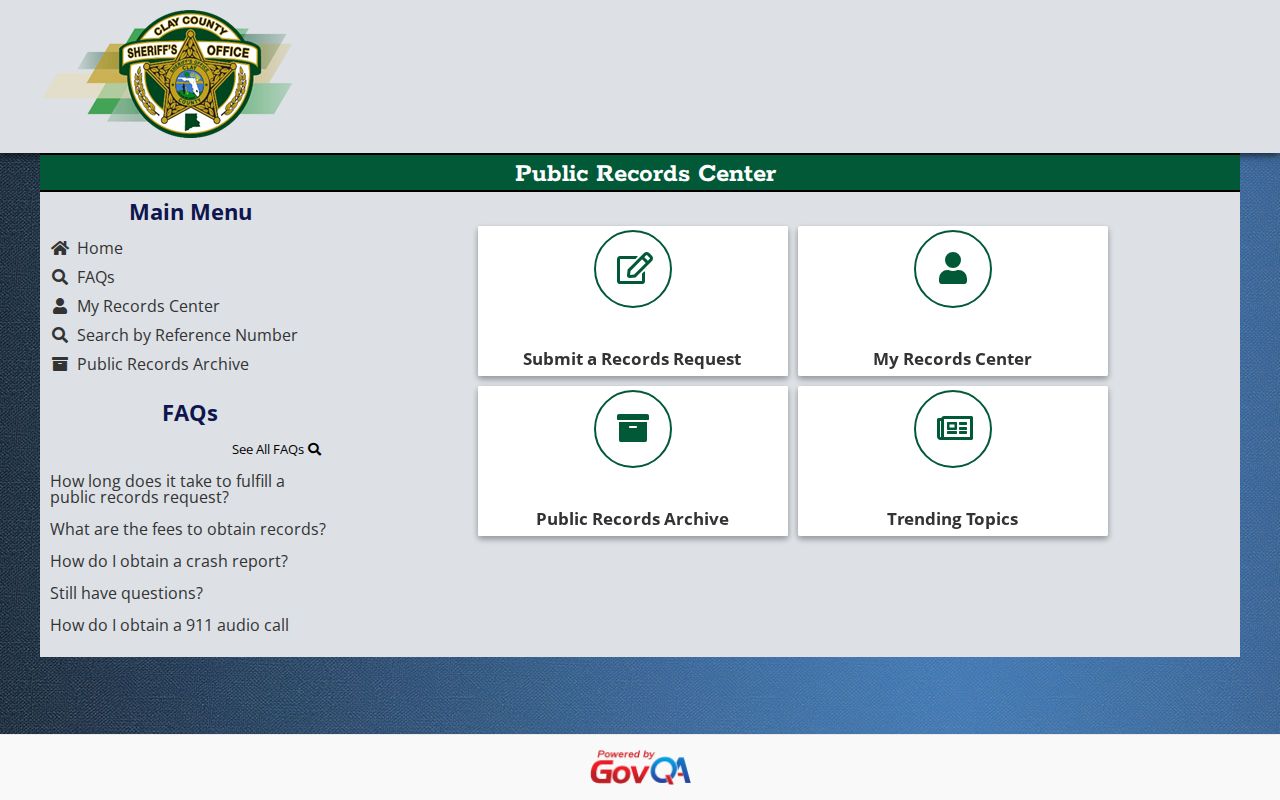
Saving the request number and agency response helps preserve the source of the image and any stated access limit.
Clay Sheriff App Photo Limits
CCSO has an agency app and other social channels. The official sources reviewed for Clay County do not document a recent-release list, inmate lookup, or booking-photo feature in that app. It should not be presented as a replacement for the inmate catalog or records portal. Features can change, but a current store listing must show the function before it is claimed.
The current CCSO app listing was captured during the source review:
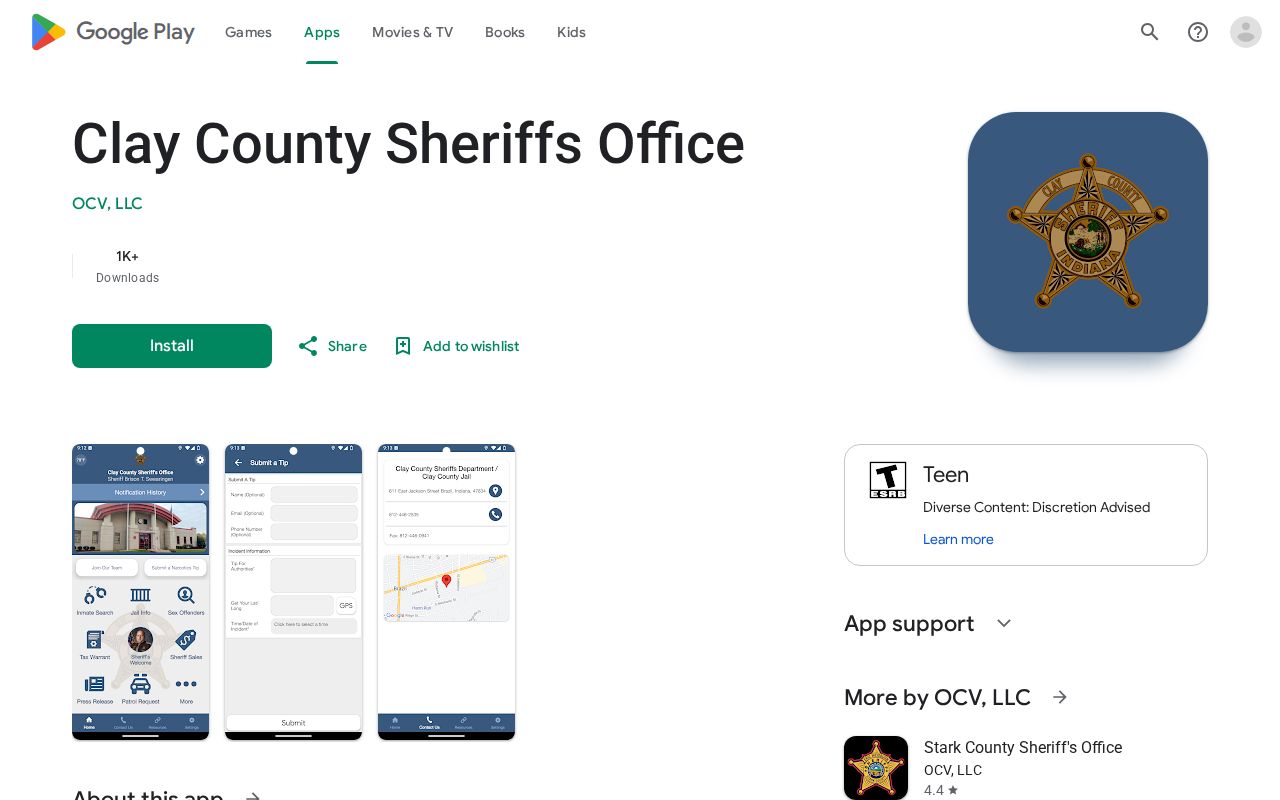
The listing supports the app’s existence as an agency channel. It does not establish a complete or retained photo archive for released inmates.
Note: Do not confuse a selected arrest post on social media with a full Clay County release record.
Clay State Release Mugshot Sources
When a Clay County case results in a Florida prison commitment, the FDC offender record may show an offender photograph. Use the FDC Inmate Release Information Search by name or DC number. Open the detail record and match the date of birth, race, sex, aliases, county, case number, sentence history, and custody dates.
The FDC image belongs to the state corrections record. It may have been made well after the Clay arrest, so it should not be called the Clay County booking photo. The same detail record can show Release Date, Date Out-Custody, stated residence at release, and incarceration history. That makes it useful for state-custody context as well as identity.
An official FDC released-record example shows the photograph beside release and custody fields:
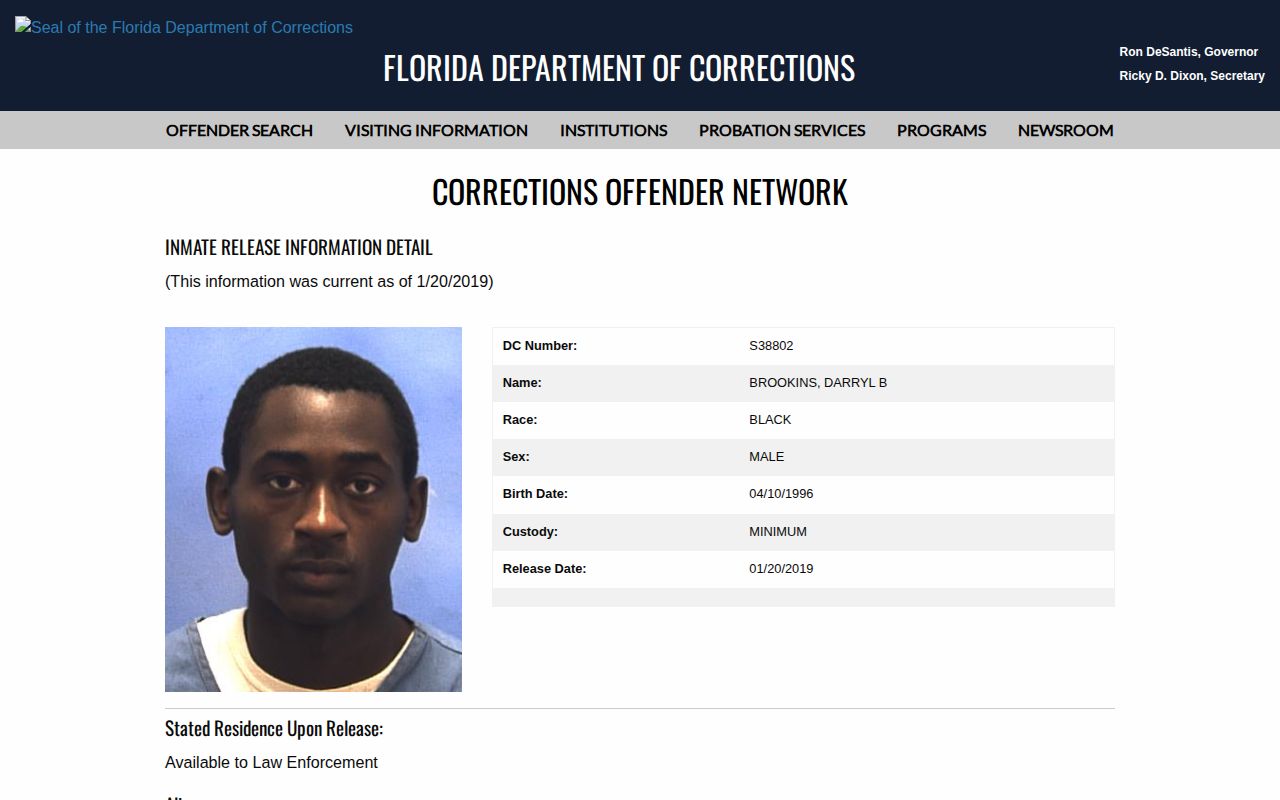
The state image does not replace the CCSO photo request when the sought record is the original Clay County jail admission.
Clay Mugshots Beyond Official Records
CCSO’s Public Information Unit and local newsrooms may publish selected arrest or incident images. These sources are editorial or agency selections, not complete rosters. Always read the original dated item and compare the name, booking period, and charge with the official jail or court record. An old story may stay online after release or after the case changes.
Commercial and third-party archives may also preserve copies after an official card changes. They are not reliable proof of present custody, release, identity, or case outcome. No commercial mugshot publisher or data broker is linked or endorsed. A copied image should never displace the originating agency record, and paid-removal claims should not be treated as legal advice.
Clay Mugshots After Expungement
Sealing and expungement can restrict public access, but a blank search does not prove that either occurred. Florida’s process begins with FDLE eligibility work and can require fingerprints, certified dispositions, proof that supervision ended, and other documents. Clay County supplies local petition, affidavit, and proposed-order forms. Only the proper court order creates relief.
Keep the booking number, certified disposition, and final order. Then contact each official custodian that still shows the image and provide the order or request the agency’s review process. The Clay Clerk routes seal and expunge questions at (904) 278-3650. Outside copies may require separate notice because a court order does not make every private copy vanish at once.
Florida Statutes section 901.43 addresses businesses that publish arrest booking photos and charge or accept payment for removal. It is separate from the public-record status of the government-held photo. The official section 901.43 text shows the commercial publication rule:
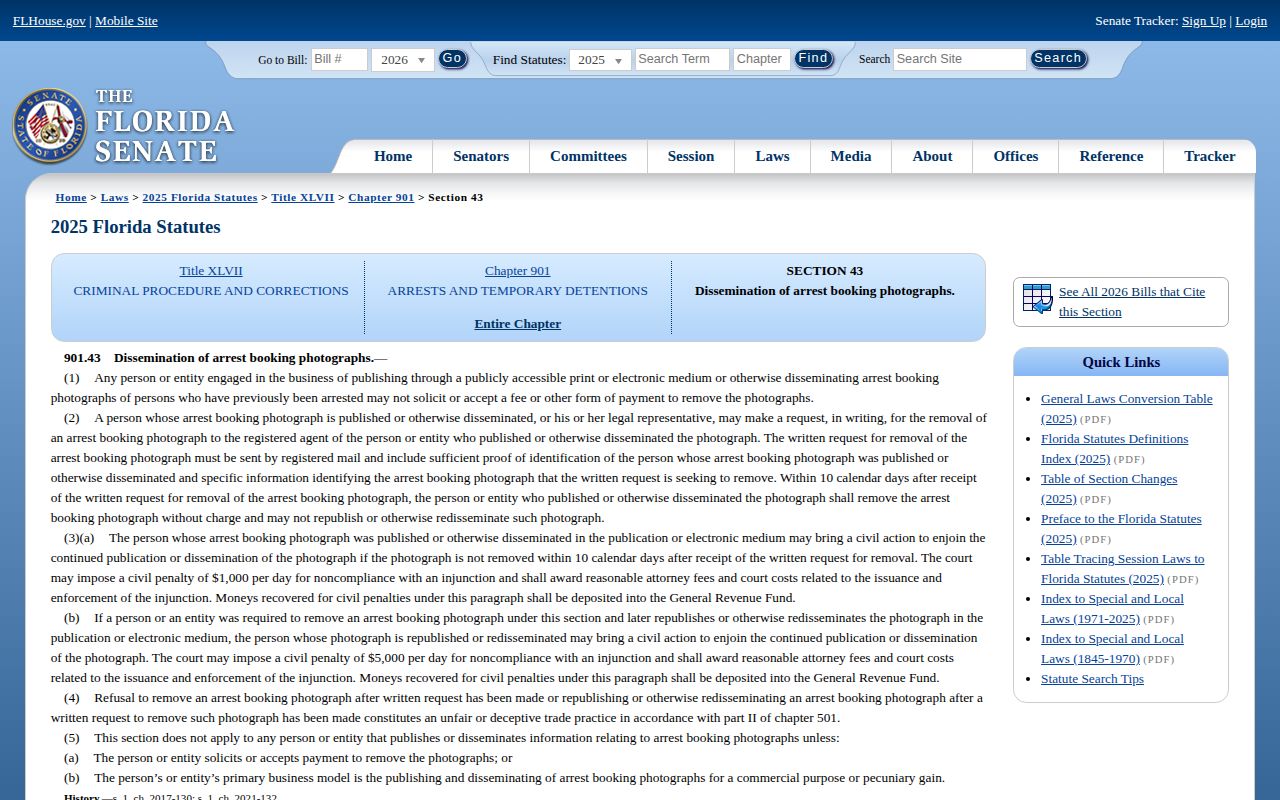
The statute does not make all CCSO booking photographs confidential. The government record remains subject to public-record law, exemptions, and any valid sealing or expungement order.
Verify Clay Release Photo Context
A booking image answers an identity question about one admission. It does not confirm physical release. Pair the photo with the CCSO release event, including date, time, method, holds, and receiving agency. Then read the Clay court docket for bond orders, disposition, sentence, probation, or later sealing and expungement activity.
The complete named-person route is on the Clay County released-inmate search. If the main goal is to see whether an identified booking appears among same-day activity, the Clay County 24-Hour Release List explains why no official feed exists and how to request the event window. Neither route treats a photo as proof of guilt or current status.