
Clay County Three-Day Release Access
The Clay County Sheriff’s Office provides a shared inmate catalog, not a distinct 72-hour release page. The official navigation also has a Daily Bulletin. That bulletin concerns incident and arrest activity, so it cannot answer who left the jail. No enabled recent-release module, fixed three-day filter, or public export was found in the sheriff’s current system.
A true Clay County 72-hour list must be built from release events, not arrest dates or roster removals. The start and end points should be stated in Eastern Time. The result should retain the jail’s event type and destination. Those fields separate a community release from a transfer to FDC, federal custody, ICE, or another local institution.
Check Clay County 72-Hour Releases
Use a three-day range when the goal is to review all county-jail departures rather than one known person. A specific range is easier for the records unit to search and easier to audit later. It also avoids an ambiguous request for “recent releases,” which may not define when the clock begins.
- Choose exact beginning and ending timestamps in Eastern Time. Include the calendar dates and time of day.
- Submit the request through CCSO Public Records, by phone at (904) 529-6090, by mail, or in person.
- Ask for the jail-management-system release-event export, not a current roster or recent-arrest report.
- Request booking number, name, booking date, actual release date and time, reason, holds, destination, charges, docket numbers, and image availability.
- Ask whether records were corrected after entry and whether transfers, deaths, or escapes share the same departure code set.
- Use the court docket and any receiving-agency record to resolve entries that do not clearly show community release.
CCSO allows anonymous requests and does not require a written request or a stated reason. A focused written range can still reduce confusion. Ask for an estimate before authorizing a large search if special staff time may be needed.
Clay County 72-Hour List Fields
The public card can help find the booking, but the requested export supplies the time and context. A useful three-day list should answer who left, which admission ended, exactly when Clay custody ended, and what occurred next. The fields below provide that chain.
| Field | How to read it |
|---|---|
| Full name and booking number | Match the event to one person and one admission. |
| Booking date | Separate repeat stays and connect the event to the right case. |
| Actual release timestamp | Test whether the event falls inside the exact 72-hour range. |
| Release method or reason | Distinguish bond, ROR, purge, fine, disposition, time served, or transfer. |
| Hold or detainer outcome | Show whether another agency prevented a community exit. |
| Receiving agency or destination | Identify the next custody system when Clay custody ends. |
| Charge and docket number | Connect the jail event with the court order and case history. |
Florida’s GS2 schedule includes commitment and release lists for people booked or released during a 24-hour period. It permits fields such as date, booking number, identity, charge, court, bond, release method, and return date, with a minimum retention of one anniversary year after release. Three consecutive daily extracts can support a 72-hour review. The schedule does not promise an online history or a fixed web-display period.
Clay Release Cards Hide Timestamps
Clay’s Police-to-Citizen data model can mark a past calendar date as “Released” and a future date as “Expected release.” Its live agency settings suppress the detailed release time and release reason. That design is useful when checking a known booking. It cannot decide whether an event at the edge of a rolling 72-hour window belongs inside or outside it.
The live CCSO settings document the missing time and reason:
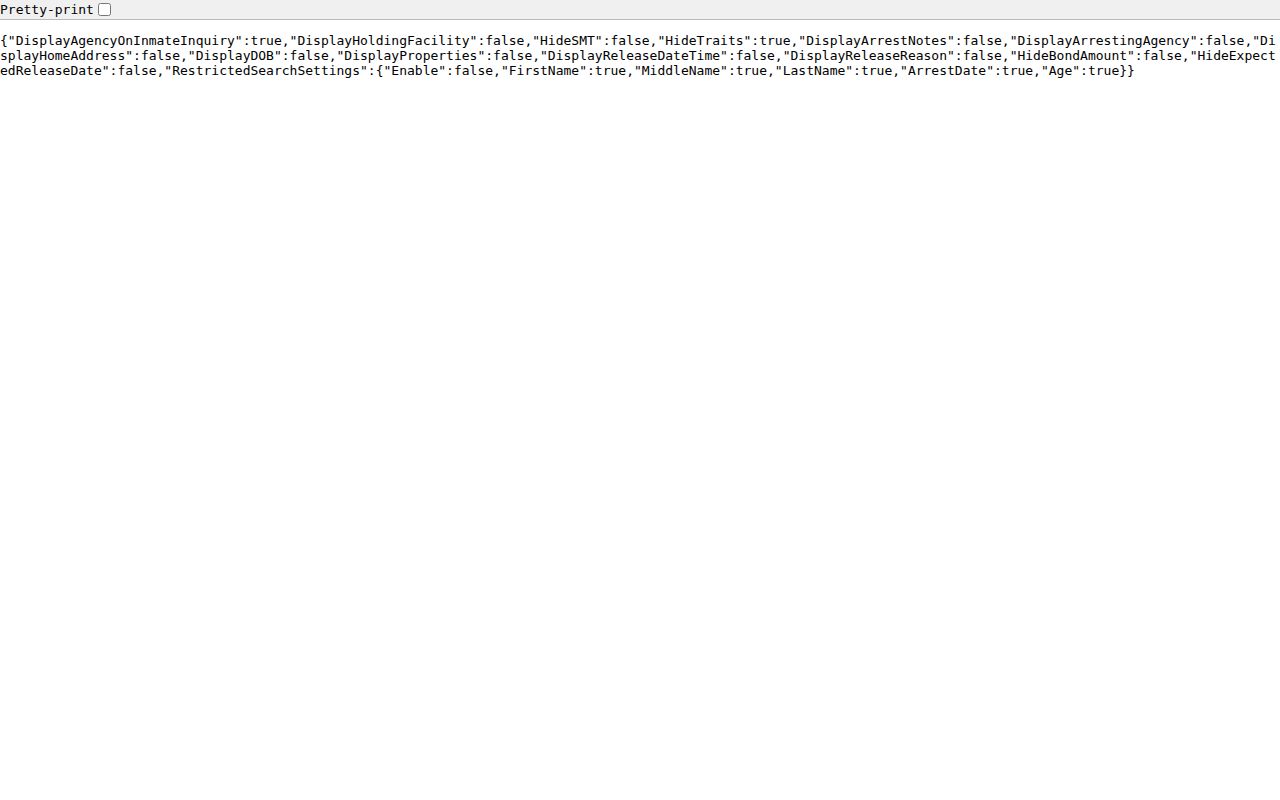
The image also shows why sorting by the visible date would create a false sense of precision. Only the underlying event timestamp can define the three-day cutoff.
Note: “Expected release” is a future field, not proof that the person left during the requested span.
Clay Weekend Release Verification
A 72-hour range is most useful when it crosses days on which public offices or transit run on different schedules. It can gather Friday, Saturday, and Sunday events into one request. It can also catch an entry posted after staff finish court paperwork, other-agency checks, property reconciliation, and final release processing.
The range should still follow timestamps, not assumptions about when a weekend starts. Court authorization may reach booking in a batch rather than in hearing order. A surety release cannot begin until the agent’s paperwork arrives. End-of-sentence timing follows separate local procedures. These factors can move physical exit well beyond the court event without changing the legal basis for release.
Clay County Release Retention Limits
CCSO publishes no fixed period for keeping a released card visible in the Police-to-Citizen catalog. Continued display does not make the catalog a complete archive. Removal does not erase the underlying release event. A sealed, expunged, protected, or technically unavailable record can also affect what a public search returns.
For an older three-day period, give CCSO the booking dates and exact release range. Ask for the inmate file when an export is unavailable. The file can include the release authorization, event log, other-agency wants check, transfer sheet, property receipt, and account disbursement. Then match the Clay Clerk criminal docket by case number. The docket may preserve bond, release order, disposition, sentence, jail credit, probation, and later completion entries after a jail card is gone.
Retention and public display are separate. An agency can keep the underlying record after removing it from a live portal. Request the original event by date and booking number, and ask CCSO to explain any field it withholds or redacts.
Match Clay Releases to Court Records
A three-day export can contain several release paths and repeat names. The Clay Clerk docket helps connect each event to its legal authority. Search by case number when available, then review the bond order, recognizance order, disposition, sentence, jail credit, probation, and later satisfaction entries. A docket order shows why release was authorized. It does not prove the hour when booking staff completed the physical exit.
Match both records by booking period and docket number. “Bonded out” means the case continues. “ROR” means release without posting money, with a duty to return to court. “Time served” means the custodial portion ended, although probation, registration, fines, or another matter may remain. “Transfer” ends Clay custody but not confinement. These distinctions keep a three-day departure list from becoming a misleading list of people presumed to be free of all custody or court duties.
When an entry lists a receiving agency, verify it there. FDC covers state imprisonment and community supervision. BOP covers most designated federal prisoners, while ICE ODLS covers current detainees and a limited recent-release window.
Verify Clay Release Status Changes
A release list records the end of Clay County custody. It does not always record freedom from all custody. A transfer is a departure from the Clay County Jail, but it begins or continues confinement elsewhere. The next system must agree with the destination recorded by CCSO.
| Record clue | Meaning and next check |
|---|---|
| Bond, ROR, purge, fine, or time served | Possible community exit. Confirm the physical time and review the Clay court docket. |
| Transfer to FDC | Clay custody ended, state custody began. Use FDC Offender Search. |
| Federal or USMS destination | Use the federal court path and BOP locator when a designation exists. |
| ICE hold or handoff | Use ICE ODLS. Do not describe the event as a community release. |
| VINELink notification | Treat the alert as a prompt to confirm with the reporting agency. |
When only one person is at issue, the Clay County released-inmate search gives the complete named-person path. It follows the booking from the catalog to court, state, federal, immigration, or supervision records as needed.
Choose Clay Release Window Length
The three-day window favors coverage. It is well suited to weekend catch-up, delayed verification, and a review of several daily event groups. The narrower Clay County 24-Hour Release List favors immediacy and release-day planning. Neither page claims a public sheriff feed exists.
Use the same exact terms in either request. Ask for actual release time, reason, detainers, and receiving agency. Those details prevent a roster disappearance, court order, or transfer from being mistaken for proof that someone returned to the community.